


Tom Daccord
10,000+ Teachers Trained. 15 Years of Global Leadership. Let’s Transform Your AI Journey.
AI Tools for French Language Teachers
-
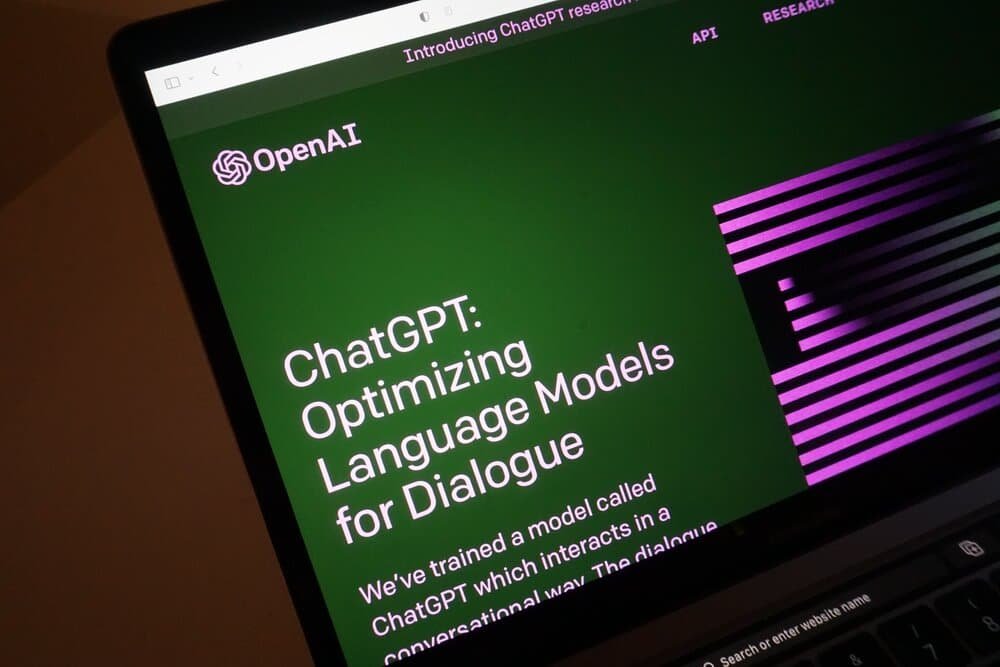
ChatGPT: French Learning
ChatGPT is a popular and flexible AI chatbot that can be an invaluable tool for French language teachers.
Features: ChatGPT, powered by the GPT-5.1 Thinking model, now offers a more natural Voice interface that can handle interruptions, follow digressions, and adapt to a learner’s tone—making French conversation practice feel much closer to speaking with a patient human tutor.
For reading, ChatGPT 5.1 can generate level-appropriate texts on almost any topic, then scaffold comprehension with glossaries, guiding questions, and step-by-step explanations of difficult passages. For writing, it can give targeted, sentence-level feedback on grammar, vocabulary, and style, suggest clearer formulations, and model strong paragraphs or full compositions without simply “doing the work” for students.
In speaking and listening, students can use ChatGPT Voice to rehearse pronunciation, role-play real-world scenarios, or hold free-flowing conversations in French. Throughout, GPT-5.1 excels at unpacking idioms, cultural references, and nuanced phrases, helping learners move beyond textbook French toward more authentic, confident communication.
Tom’s Take: The interactive nature of ChatGPT makes language learning more engaging and less intimidating for beginner and intermediate learners. Its 24/7 availability ensures that students can practice at any time, providing flexibility that traditional classroom settings might not offer.
Price: GPT-5.1 is available for free, but limited to about 10 messages every 5 hours. ChatGPT Plus includes GPT-5.1 and higher usage limits. GPT-5.1 is also available to ChatGPT Edu clients.
-

Glossarie: Innovative Vocabulary Building
Glossarie is a free language learning app that offers an immersive approach to mastering French, Italian, or Spanish.
Features: As you read a book, Glossarie introduces new vocabulary and grammar concepts and the difficulty level progresses gradually as you interact with Glossarie.
Glossarie also provides detailed explanations and native pronunciation. In addition, the app offers a library of free, public domain eBooks.
It uses spaced repetition to reinforce learning and you can progress in difficulty from beginner to intermediate to advanced. And you can test yourself on useful phrases.
There are free ebooks available and you can upload your own epub and txt files.
Tom’s Take: If your read books on your cell phone or tablet, as I do, then I think you’ll find Glossarie’s features more than helpful.
Price: Free
-

Duolingo: French Made Fun
Duolingo, the world's most widely used educational app, boasts tens of millions of subscribers who collectively complete an astonishing 1 billion exercises daily. The platform provides approximately 100 courses for learning languages, with lessons encompassing reading, writing, listening, speaking, and more.
Features: The learning environment in Duolingo is driven by AI and gamified, featuring brief, interactive exercises and AI customization in a setting that is both enjoyable and challenging. (The Duolingo Stories are simply hilarious!) Users accumulate points, earn rewards, and vie for advanced levels. Its AI mechanism, Birdbrain, assesses the difficulty of exercises and the proficiency of users. Based on feedback from learners, Birdbrain chooses exercises for future lessons, maintaining a balance between challenging and motivating users.
In August 2023, Duolingo introduced "Duolingo Max," incorporating unique AI features into selected courses and devices. Utilizing OpenAI's GPT-4, Duolingo can provide AI-produced clarifications, assisting users who repeatedly make errors, and allows users to practice dialogues with AI-powered characters, improving real-world conversational abilities.
Price: Free with ads. Paid options add extra features.
-
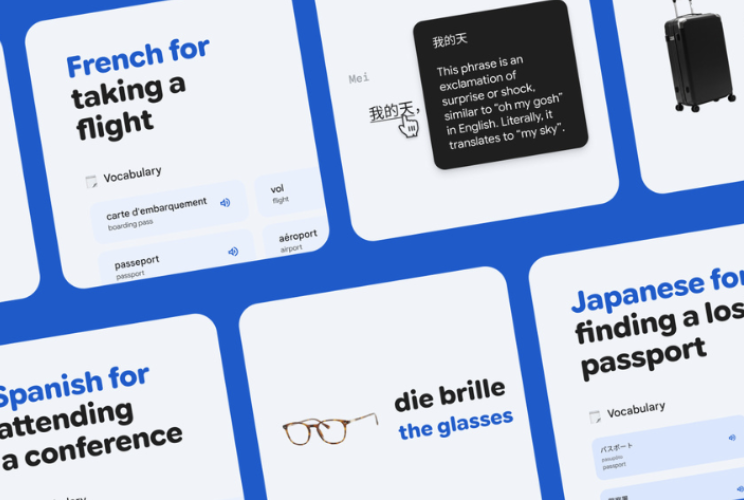
Little Languge Lessons
Little Language Lessons is a Google AI experiment powered by Gemini that delivers tiny, mobile-first language activities directly in the browser—no app install required. It is currently available in French among other languages and is designed for quick, real-world practice on the go.
Features: LLL offers three main modes: Tiny Lessons for short vocabulary and phrase practice, Slang Hang for idioms and informal expressions, and Word Camp for learning from photos—students snap or upload an image and get contextual French language prompts based on what they see. AI Prompts can be personalized, so learners can practice phrases tied to upcoming trips, current units (e.g., food, daily routines), or local slang. Because lessons are brief and adaptive, they work well as warm-ups, exit tickets, or independent practice between classes.
Tom’s Take: Little Language Lessons is a “micro-dose” companion to more structured tools like Duolingo or classroom tasks. It’s ideal for nudging students into frequent, low-stakes French practice on their phones and for exposing them to authentic-sounding slang and everyday expressions that rarely make it into textbooks. Teachers will want to curate links and give clear prompts, but once set up, LLL becomes a simple way to keep French present in students’ daily lives.
Price: Free (experimental). At the time of writing, Little Language Lesson is available at no cost with a Google account while it remains in Google Labs / experimental status.
-
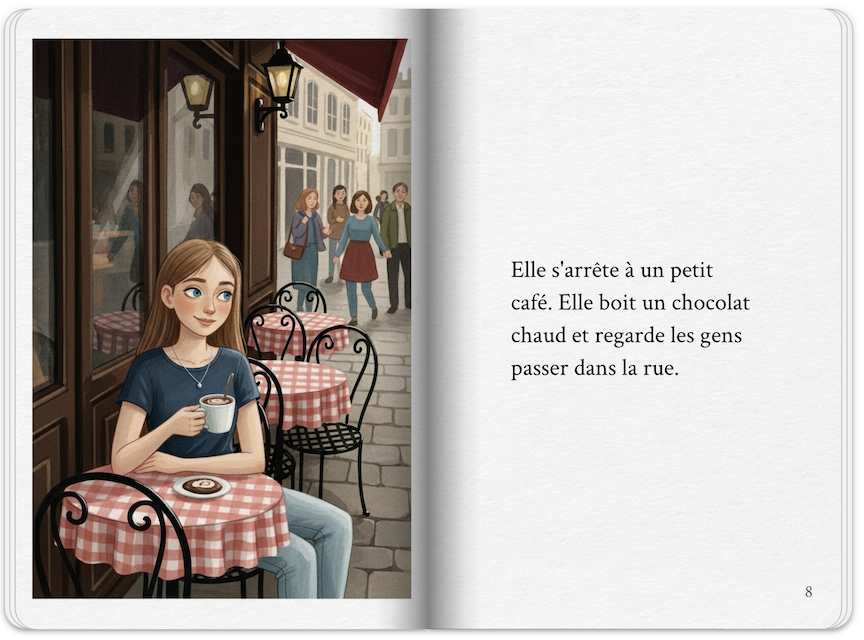
Gemini Storybook
Gemini Storybook is a feature inside the Gemini app that lets you generate personalized, 10-page illustrated storybooks with read-aloud narration based on a simple text prompt. It supports over 45 languages, including French, so teachers can quickly create leveled storybooks tailored to specific themes, grammar points, or vocabulary sets.
Teachers describe the story they want (for example, “Create a French storybook for novice learners about two friends planning a weekend trip, emphasizing future tense and travel vocabulary”) and Gemini generates a multimodal story with images and audio. You can upload photos (e.g., local landmarks, classroom pictures) for a more personal or culturally relevant story, then export the book as a PDF via the browser’s Print function and import it into tools like Book Creator or your LMS for shared reading, listening activities, and comprehension questions.
Tom’s Take: Gemini Storybook is great for moving from an idea (“I need a simple past tense story set in a French-speaking city”) to a ready-to-use illustrated text with audio that students actually want to read. It’s powerful for differentiated learning because you can generate parallel versions of the same story at different levels, or emphasize different grammar targets while keeping characters and visuals consistent.
Teachers still need to review for occasional odd images or phrasing, but Gemini Storybook is one of the most flexible options available right now as a generator of fresh French reading/listening material,
Price: Gemini Storybook is available through the Gemini web and mobile apps at no extra cost for basic use; some advanced Gemini features and higher-tier usage may require a paid Google AI / Gemini subscription.
-
Hello Nabu
Hello Nabu is an AI-powered language learning platform built around conversation and story-based practice rather than isolated drills. It’s CEFR-aligned from A1 to C1 and supports multiple languages, including French, with structured progress through chapters and real-life scenarios.
Features: Hello Nabu focuses on conversational fluency. Learners practice through interactive stories and role-play situations (e.g., travel, work, daily life) while the AI tutor gives real-time feedback on pronunciation, grammar, and vocabulary. Personalized learning paths are built around goals (moving abroad, work, study), and content is sequenced by CEFR level, so students can move from beginner survival phrases to more complex interactions while tracking progress.
For French teachers, this makes Hello Nabu useful as an out-of-class conversation lab: students can rehearse real-world dialogues, receive instant corrective feedback, and return to scenarios that match your current unit (e.g., ordering food, asking directions, workplace communication).
Tom’s Take: I like Hello Nabu’s “story first” design and its emphasis on speaking from day one. Compared with more game-like apps (Duolingo, Memrise), it feels closer to guided conversation practice, especially for older teens and adults who want authentic, situational French. The main caveat is that it’s not a full LMS for schools, so teachers will likely use it as a supplementary speaking and listening tool—assigning specific stories or scenarios and asking students to reflect on new vocabulary, expressions, or pronunciation feedback.
Price: As of December 2025, Hello Nabu is free for individual learners, with premium features planned for the future. Business and university licenses (with custom curricula and team features) use custom institutional pricing.
AI-Powered Language Speaking Practice: An Extensive Review of Top Tools for Learners
-Tom Daccord
.



-

Memrise: French Course
Memrise is a language-learning app that's available on both Android and iPhone and boasts over 45 million active users across the globe to date.
Features: Memrise is designed to make the process of learning a foreign language fun and exciting. The courses and programs on the app are like different stages and levels of a game. You can progress from beginner to intermediate and advanced levels of learning by completing the various steps. The French course offers more than 1100 lessons, 8000 vocabulary words, 800 videos and 75 AI conversations.
As a Memrise user, you get access to professional video and audio lessons from natives during each course, a great addition to their multimedia lessons. The new Memrise Discord App allows learners to practice one-on-one French conversations with a chatbot, or join a groups and converse collectively.
Tom”s Take: I used Memrise for a few months to learn Spanish and was impressed with its diverse content and effective method. And much content is available for free.
Price: Free and paid options.
-

Drops: Visual Vocabulary
Drops is an engaging language learning app that is part of the Kahoot! family.
Features: Drops is colorful and lively app that focuses mainly on teaching vocabulary. Like its inspiration, Kahoot!, Drops is game-based and has a minimalistic design.
Each card contains one icon-based design, an audio file, the vocabulary word, and the English translation. Words are organized under practical categories like Travel Talk, Fun and Recreation, Nature and Animals, and more. The Review Dojo is a special section in Drops to test what you’ve learned using spaced-repetition algorithm.
With Drops, you can learn more than 2,500 words across over 150 topics in minutes a day. The app is available in 42+ languages, and is compatible with mobile devices.
Tom’s Take: Drops is fun — as much fun as Kahoot! It’s a lively and helpful platform that has received a lot of favorable ratings and reviews from users and has been featured by CNET and Forbes.
Price: The free version allows for 5 minutes of practice a day.
-

Boukili
Boukili is a free educational app designed to foster a love for reading in French among children.
Features: Boukili offers an engaging collection of illustrated children’s books aimed at kids aged 4 and above. It offers a fun and interactive way to learn to read French.
Boukili takes young readers on a virtual journey around the world. As they explore 30 different countries, they encounter diverse cultures, landscapes, and traditions. Also, children can create their own raccoon character so they can interact with the books on a more personal level.
Boukili comes with a Teacher Dashboard so that educators can follow the progress of their students.
Tom’s Take: I wish I had Boukili at my disposal when I was learning French as a child! It’s lively, fun, and educational.
Price: Free
Work With Tom: Multilingual Educator
An international education technology speaker and instructor for more than two decades, Tom presents in English, Spanish, and French and has authored four books on education technology.
Sample World Language Sessions
Unique Challenges and AI Opportunities Across World Language Classrooms
Role-Play to Fluency: Designing AI Scenarios That Build Vocabulary, Pronunciation, and Speaking Confidence
How Multimodal AI is Transforming Language Learning
Language learning is entering an extraordinary new era.
-Tom Daccord
.

-

Langua
Langua is a cutting-edge AI language tutor launched in 2024 that prioritizes speaking fluency and authentic conversational immersion.
Features: Langua features one of the most human-like AI voices available—emotionally expressive, naturally paced, and regionally accented. Learners can select from multiple tutor personas (e.g., “Carlos” with a Mexican accent), helping users tune their ear to specific dialects for targeted goals like AP or Canadian French.
Langua supports flexible conversation types: open-ended chats, Role-plays, Debates, Games, or grammar-focused sessions. Users set their CEFR level (A1–C1+), and the AI adjusts accordingly.
During a session, learners can ask for help or grammar explanations—even mid-conversation—making Langua feel like a responsive, patient tutor. However, verbal conversations must be manually activated by selecting “Call mode (Beta)” in Chat Settings. Once in Call Mode, Langua displays a real-time transcription that can be hidden to promote active listening.
Tom’s Take: Langua excels at integrated feedback. It subtly corrects grammar in real time without derailing the conversation, and provides a helpful post-session summary highlighting new vocabulary (with definitions), grammar tips, and common mistakes. While it doesn’t give detailed pronunciation scores, it offers native-like alternatives and tips to smooth choppy speech.
Unlike Talkpal, Langua blends both verbal and non-verbal interaction, with voice quality and conversational realism setting it apart. Still, it lacks a structured learning path like Duolingo and requires setup to enable speaking. It’s best suited for intermediate and advanced learners seeking a natural-sounding conversation partner to build confidence and fluency.
Price: The app is priced at $25/month, significantly higher than Talkpal or Duolingo, which may limit accessibility. But Langua earns 4.6–4.8★ ratings from users.
-

Univerbal
Univerbal is a conversation-based language learning app that combines visual appeal with structured instruction.
Features: Univerbal presents AI-generated human images as your conversation partners and lets you choose from diverse discussion topics such as Politics, Art, Movies, Technology, and Music. This visual-persona approach adds realism and engagement.
Univerbal’s conversation mode is multimodal, blending text and audio. You can read your AI partner’s question, reply verbally, preview your response in text, and then submit it—creating a back-and-forth experience that allows for reflection and correction. However, since spoken dialogue typically leaves little room for pauses or reading translations, the delay between prompts and responses can hinder fluency development.
To improve authenticity, learners can enable “audio-only” mode in Chat Settings and activate “auto-recording”, which cues the microphone right after the AI finishes speaking. Users can also slow down the AI’s speaking rate for better comprehension. These features help simulate natural conversation—yet even in “audio-only” mode, users still see their own spoken text and must manually send replies, making the interaction feel scripted rather than spontaneous.
Tom’s Take: Where Univerbal stands out is in its structured learning system. It includes a full language course and a placement test, offering curriculum-based progression that apps like Talkpal lack. This makes it ideal for learners seeking both conversation and directed study. It’s especially helpful for users who want to align their practice with CEFR-style levels or who prefer more structure alongside AI conversation.
For those seeking curriculum support along with AI-driven conversational practice, Univerbal offers a well-rounded and visually engaging experience. For me, its biggest limitation is the lack of seamless, real-time speaking flow—but for many learners, the balance of structure and practice may outweigh that drawback.
Price: The app offers a 7-day free trial, with a full plan priced at $119.99/year ($10/month).
-

Tutor Lily
Tutor Lily is an AI-powered language app focused on real-time verbal practice and feedback.
Features: Like Talkpal, Langua, and Univerbal, Tutor Lily offers conversations in both audio and text, allowing learners to read and hear the AI simultaneously. At first glance, the interface feels minimal, but tapping the “dice” icon reveals options to select a character (usually based on English-speaking celebrities), a roleplay scenario (e.g., ordering food), or a topic such as Music, Sports, or Family.
Tutor Lily supports “Hands-Free Mode,” which boosts the realism of verbal conversations by automatically sending your spoken message when you pause—no need to press “Send.” You can also adjust the voice speed, a helpful tool for listening comprehension. Unfortunately, the app doesn’t allow users to fully disable live transcripts, which detracts from immersion. Still, the hands-free interaction makes the experience more fluid than many competitors.
In terms of learning support, Tutor Lily does not provide a structured curriculum. Instead, it focuses on immediate, practical interaction, offering helpful pronunciation corrections, vocabulary suggestions, and simple explanations mid-chat. These features are useful, especially for beginner to intermediate learners looking for real-time feedback.
Tom’s Take: Overall, Tutor Lily offers basic, responsive speaking practice in a budget-friendly format. It’s best for learners who want casual conversations with feedback but can tolerate some interface quirks and a limited feature set.
However, the app shows signs of technical instability. Switching between conversation modes (e.g., Roleplay vs. Topics) was glitchy for me during testing, with delays or outright failures to load content—possibly due to platform-specific issues (e.g., iOS bugs). Unlike Langua or Univerbal, which offer smoother navigation or more polished UIs, Tutor Lily’s functionality feels uneven at times.
Price: The free version is limited to 10 messages and 2 corrections per day, and includes ads. The Pro version costs $83.99/year.